

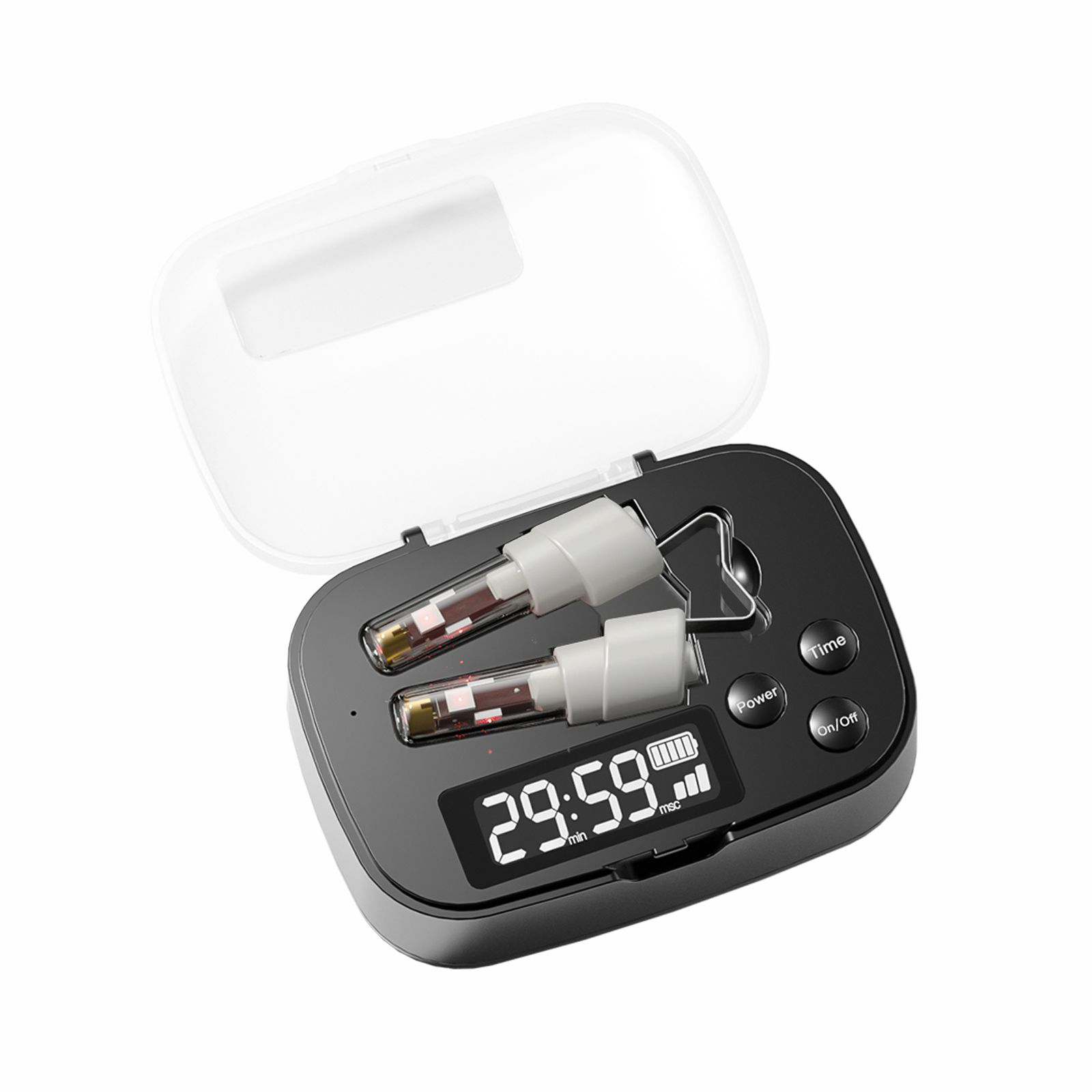
Laser Rhinitis Device Original Manufacturer: Advanced Solutions for Allergic Rhinitis Relief
2026-10-12
For millions dealing with allergic rhinitis, most “solutions” stop at temporary symptom relief. But what if the problem isn’t the therapy—it’s the source? As the original manufacturer of laser rhinitis devices, GUANG TAI is quietly rewriting the playbook with advanced, precision-focused technology designed for lasting relief. Here’s what sets genuine innovation apart from the rest—and why it matters for patients and buyers alike.
The Science That Makes Laser Rhinitis Devices Effective Against Allergies
Many allergy sufferers are surprised to learn that a handheld light can quiet a runny nose. The core mechanism isn't heat or vibration but a process called photobiomodulation. Low-level red and near-infrared light penetrates the nasal mucosa and is absorbed by mitochondria inside cells. This absorption boosts cellular energy production and triggers a cascade of anti-inflammatory signals that directly counter the overactive immune response behind allergic rhinitis.
In allergic rhinitis, mast cells in the nasal lining release histamine and other inflammatory chemicals when triggered by pollen or dust. Laser rhinitis devices emit wavelengths that stabilize these mast cells, making them less likely to burst and spill histamine. At the same time, the light promotes better blood flow and lymphatic drainage in the nasal tissues, which helps clear allergens and reduces swelling. This dual action - calming the allergic cascade while improving local circulation - explains why many users feel relief after just a few short sessions.
Clinical studies on intranasal low-level laser therapy report meaningful reductions in sneezing, nasal congestion, and itching without the drowsiness of antihistamines or the rebound effect of decongestant sprays. Because the treatment targets the tissue environment rather than masking symptoms, its benefits can build over repeated use. That's the underlying science: a precise wavelength of light acts as a gentle reset button for irritated nasal passages, restoring a more balanced immune response to everyday triggers.
Why Original Manufacturers Invest in Advanced Nasal Therapy Research
Nasal drug delivery has moved from a niche option to a strategic priority for many original manufacturers. The nasal mucosa offers a dense vascular network and a large absorptive surface, allowing many compounds to enter systemic circulation within minutes. For molecules that degrade in the gastrointestinal tract or undergo extensive first-pass metabolism in the liver, this route can dramatically improve bioavailability. Equally compelling is the direct pathway from the olfactory region to the central nervous system, which opens up treatment possibilities for neurological conditions where traditional oral or injectable therapies struggle to cross the blood-brain barrier.
Beyond pharmacokinetics, patient acceptance shapes investment decisions. Needle-free administration reduces the anxiety and logistical burden associated with injections, while nasal sprays and drops are often easier for children, older adults, and people with swallowing difficulties. In chronic disease management, where adherence directly influences outcomes, a familiar and convenient dosage form can keep patients on therapy longer. Manufacturers recognize that this usability advantage can reduce hospital visits and caregiver involvement, positioning their products as practical solutions rather than just clinical innovations.
There is also a commercial logic tied to product differentiation and lifecycle management. As patents on blockbuster oral drugs expire, reformulating an existing molecule for nasal delivery can create a new intellectual property position and extend market exclusivity. Collaborations with device specialists allow companies to pair proven active ingredients with precision spray pumps or breath-actuated systems, raising barriers for generic competitors. This approach not only breathes new life into mature portfolios but also addresses unmet needs in acute care settings, such as rapid seizure control or opioid overdose reversal, where speed of onset is critical.
A Practical Guide to Laser Treatment for Allergic Rhinitis Symptoms
Most laser protocols for allergic rhinitis target the inferior turbinates with a low-level or diode laser, delivered through a slim fiber after the nose is numbed with a topical spray. Sessions usually take ten to twenty minutes, and you sit upright while the laser passes gently along the swollen tissue. There’s no cutting or packing, so most people return to work the same day, though you might notice a brief stuffy or dry sensation for a few hours.
Symptom relief tends to build gradually rather than after one visit. Many clinics schedule two to four treatments spaced one to three weeks apart, with sneezing, congestion, and postnasal drip often easing after the second or third session. It’s worth asking whether the device used has published wavelength and energy settings, because outcomes vary widely between low-level laser therapy and surgical laser reduction.
This approach suits people whose symptoms are mostly mucosal swelling rather than structural blockage from a deviated septum or polyps. A short course of saline rinses and avoiding irritants for a few days can help settle the nasal lining afterward. If you use daily antihistamines or steroid sprays, keep them on hand initially, since laser therapy may reduce but not eliminate the need for medication.
How Modern Laser Devices Reduce Reliance on Antihistamines
For years, allergy sufferers leaned on daily antihistamines just to get through pollen season, accepting drowsiness or dry mouth as the cost of clear sinuses. Modern laser devices flip that equation by targeting the nasal passages directly, shrinking swollen tissue and calming the overactive nerve responses that trigger histamine release. Instead of masking symptoms with a pill, these low-level light therapies encourage the body to stop overreacting in the first place, meaning fewer trips to the pharmacy and more mornings without a foggy head.
The practical shift shows up in real routines: someone who once kept a blister pack of cetirizine on the nightstand now reaches for a handheld laser wand for ten minutes before bed. Clinical observations note that after a series of treatments, many users find they can halve their antihistamine dose or reserve it only for peak allergen days. The laser doesn't act as a drug replacement so much as a reset button for irritated mucous membranes, reducing the inflammatory cascade that used to demand constant chemical intervention.
What makes this approach stand out is the absence of systemic side effects. Unlike antihistamines that circulate through the bloodstream and cross into the brain, photobiomodulation stays local, working on the tissue it touches without sedation or rebound congestion. Users often describe the change as subtle but cumulative: the third week of treatment feels less like allergy season and more like a normal week. That gradual decoupling from medication is exactly what modern laser therapy promises—relief that comes from the body's own repaired response, not from a daily dose.
Inside the Production of Reliable Laser Rhinitis Devices
Every batch of laser diodes for rhinitis devices is screened before assembly. A supplier might claim a 650 nm center wavelength, but actual units can drift by several nanometers, which shifts tissue penetration depth. We reject any diode with more than ±2 nm deviation or noticeable beam ellipticity, because those small defects become treatment inconsistencies. The housing and fiber alignment jig are then assembled in an ISO 7 cleanroom, mostly to keep dust off the lens surfaces and optical windows where it would scatter the beam.
After assembly, each device goes through a two-stage calibration. First, output power is measured with a photodiode sensor calibrated against a reference meter, and the drive current is adjusted until the device sits within the intended 5–10 mW range. Second, the unit runs through a 48-hour burn-in cycle with periodic power sampling. Any drift greater than 3% fails the batch. For models with pulsed modes, pulse width and frequency are verified on an oscilloscope before the board is potted in place.
The last step is traceability, not just quality inspection. Every device gets a unique serial number tied to the calibration report, the diode lot code, and the operator who performed the final optical test. Battery-powered units are also drained once from full charge to empty to confirm the low-battery cutoff doesn't let output power sag. A small number from each production run are then pulled for a 200-hour continuous operation test. If any of those units show diode degradation, the entire run is reworked.
What Long-Term Users Notice After Switching to Laser Therapy
After a few months of regular sessions, the first thing most people mention is how much less time they spend dealing with regrowth. The stubble that used to appear within a day or two either stops showing up altogether or comes back so fine and sparse that it barely registers. That alone changes the morning routine—no more last-minute shaving, no more planning outfits around razor burn.
There is also a shift in how the skin itself feels. Long-term users often notice that the rough, darkened patches left behind from years of shaving or waxing start to fade. The skin tone looks more even, and the constant cycle of irritation, ingrown hairs, and scabbing finally has a chance to heal.
Over time, the savings become obvious too. What used to go toward razors, wax appointments, or depilatory creams now stays in the bank, and the only maintenance is an occasional touch-up session. Most people say they wish they had made the switch earlier.
FAQ
We build every unit around a specific wavelength and energy output that targets the nasal mucosa without heating surrounding tissue. The handpiece is designed for at-home use, but the manufacturing tolerances and quality checks follow medical device standards rather than consumer gadget shortcuts.
The light energy reduces local inflammation and helps stabilize the nerve responses that trigger sneezing, congestion, and a runny nose. Most users notice less reliance on sprays or antihistamines after a few weeks of consistent short sessions.
Yes, when used as directed. The output is kept well below levels that could damage tissue, and we include built-in timers and contact sensors to prevent overexposure. It is non-invasive and leaves no residue or medication in the body.
Absolutely. As the original manufacturer, we handle everything from housing color and logo placement to firmware adjustments, packaging languages, and regional certification support. Minimum order quantities are flexible depending on the level of customization.
Each batch passes electrical safety, biocompatibility, and optical output verification. We support clients with CE, FDA, and other regional documentation where applicable, and our in-house lab can run additional tests if your target market requires them.
A typical session lasts three to five minutes per nostril. We recommend once or twice a day during allergy season, then tapering to a maintenance routine of a few sessions per week once symptoms improve.
People with active nasal infections, recent nasal surgery, or known light sensitivity conditions should consult a doctor first. It is not intended for children without adult supervision and medical advice.
We offer training materials, replacement part supply, firmware updates, and a dedicated technical contact for distributors. If a unit fails under normal use, our warranty covers repair or replacement according to the agreed terms.
Conclusion
For anyone tired of battling seasonal or year-round allergic rhinitis, the shift toward light-based nasal therapy has opened a genuinely different path. Unlike sprays that mask symptoms for a few hours, a laser rhinitis device works at the level of nasal tissue photobiomodulation. Low-level laser energy, typically in the red or near-infrared spectrum, penetrates the swollen mucosa and helps calm the overactive inflammatory response that turns pollen or dust into a full-blown attack. Original manufacturers don't just assemble these devices; they run clinical trials, refine wavelength parameters, and test ergonomics so that a user can hold the probe comfortably for the six to eight minutes a typical session takes. This commitment to research is why some products now come with pre-set treatment modes for different symptom intensities, letting a first-time user start gently and increase exposure as tolerance builds. The practical routine is simple: clean the nostril area, position the light emitter, and let the device run while you read or listen to a podcast. Many people find that twice-daily use during peak allergy season delivers the most noticeable softening of congestion and sneezing fits.
A less obvious benefit emerges over weeks of consistent use: the need for daily antihistamines often drops. Because laser therapy addresses the inflammatory cascade rather than just blocking histamine receptors, users report fewer rebound congestion episodes and less morning grogginess tied to first-generation allergy pills. Reliable original manufacturers enforce strict quality controls, from diode calibration to battery safety, because a poorly tuned laser would deliver inconsistent energy and undermine trust. Long-term users frequently describe subtle changes—clearer breathing on high-pollen days, faster recovery after exposure to pet dander, and fewer sinus pressure headaches. They also mention that while the device doesn't replace emergency medication for severe reactions, it serves as a stable, non-drowsy foundation for daily management. In a crowded market of allergy gadgets, the difference comes down to engineering honesty: an original manufacturer stands behind the wavelength accuracy, treatment time, and durability of each unit, and that is what turns a promising idea into a practical home therapy. The result is less dependence on short-acting sprays and more freedom to move through the day without constantly monitoring pollen counts.
Contact Us
Contact Person: Manager Mei
Email: [email protected]
Tel/WhatsApp: +8618627866609
Website: https://zzgt.en.alibaba.com/